A Photographer's Guide to Planning Your Destination Wedding in Croatia
Author
Nives Batistić
Published
Categories
Tips
Wedding
Share
I'm not a wedding planner, but I've spent the last few years photographing destination weddings along Croatia's coast, including Rijeka, Opatija, Istria, and the Kvarner islands. Through that I've watched enough couples navigate this process to know what tends to go smoothly and what tends to cause some last-minute stress.
This is what I'd tell a friend who was considering getting married here.
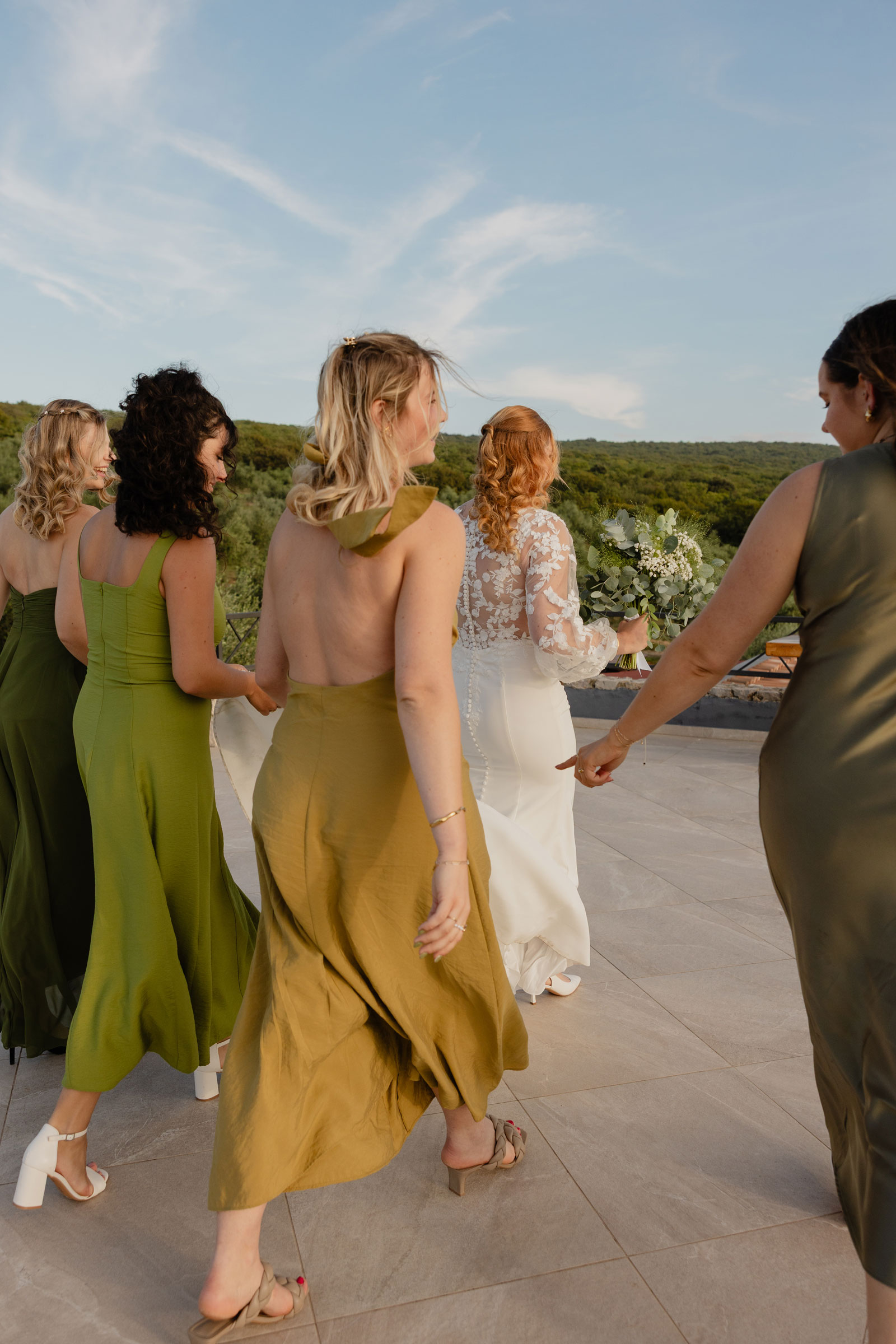
Image location: Punat, Krk
Why Couples Keep Choosing Croatia
It's not hard to understand why. Croatia has amazing lighting, especially in the golden hour before sunset on the Adriatic, and venues that feel genuine and authentic rather than purpose-built for weddings. Stone walls that are centuries old, gardens that tumble down to the sea, and hilltop restaurants where the chef writes the menu that morning based on what arrived from the fishing boats.
But beyond the aesthetics, there's something else: Croatia is still somewhat under the radar compared to destinations like Tuscany or the Algarve. You get better value, fewer crowds outside of July and August, and a real sense that your wedding belongs to you.
For couples who want something small and personal, a wedding under 80 guests focused on great food and real moments in the Kvarner region or Istria can offer experiences that the more famous Croatian destinations can't quite match.
The First Decision: Legal or Symbolic?
This is the question that gets asked most often, and it's worth settling early because it shapes everything else.
Legal ceremony
A legal ceremony in Croatia is entirely possible for foreign couples. There are no residency requirements, which makes it genuinely accessible as a destination wedding. But the paperwork is real.
The volume of documentation depends on the citizenship of each spouse, as each country has different requirements, and if you and your partner are from different countries, you may each need to provide different documents. Everything must be submitted to the local registrar's office at least 30 days before the wedding, translated into Croatian by a certified court interpreter, and many documents will need an Apostille stamp. The ceremony date itself is set between 30 and 45 days after you declare your intention to marry.
For UK citizens, a Certificate of No Impediment must be obtained through the UK Embassy in Zagreb. US citizens need to complete a Marriage Affidavit before a US Consular Officer at the US Embassy in Zagreb, which then needs to be authenticated by the Croatian Ministry of Foreign Affairs.
If you want a legally binding ceremony in Croatia, I'd highly recommend you work with a local wedding planner who handles this routinely. They'll know exactly what's required for your specific nationalities and will save you a significant amount of back-and-forth. It's worth it.
Symbolic ceremony
A symbolic ceremony gives you almost total freedom. No paperwork, no deadlines, no court interpreter standing beside you during your vows. You can marry on a cliff, in an olive grove, on a boat, or in a medieval ruin.
Many couples complete the legal formalities at home before or after the trip and simply have their ceremony in Croatia as the celebration. From a photography perspective, symbolic ceremonies tend to be more relaxed and more personal, especially if you get a friend or a family member to lead it, and that always shows in the images.
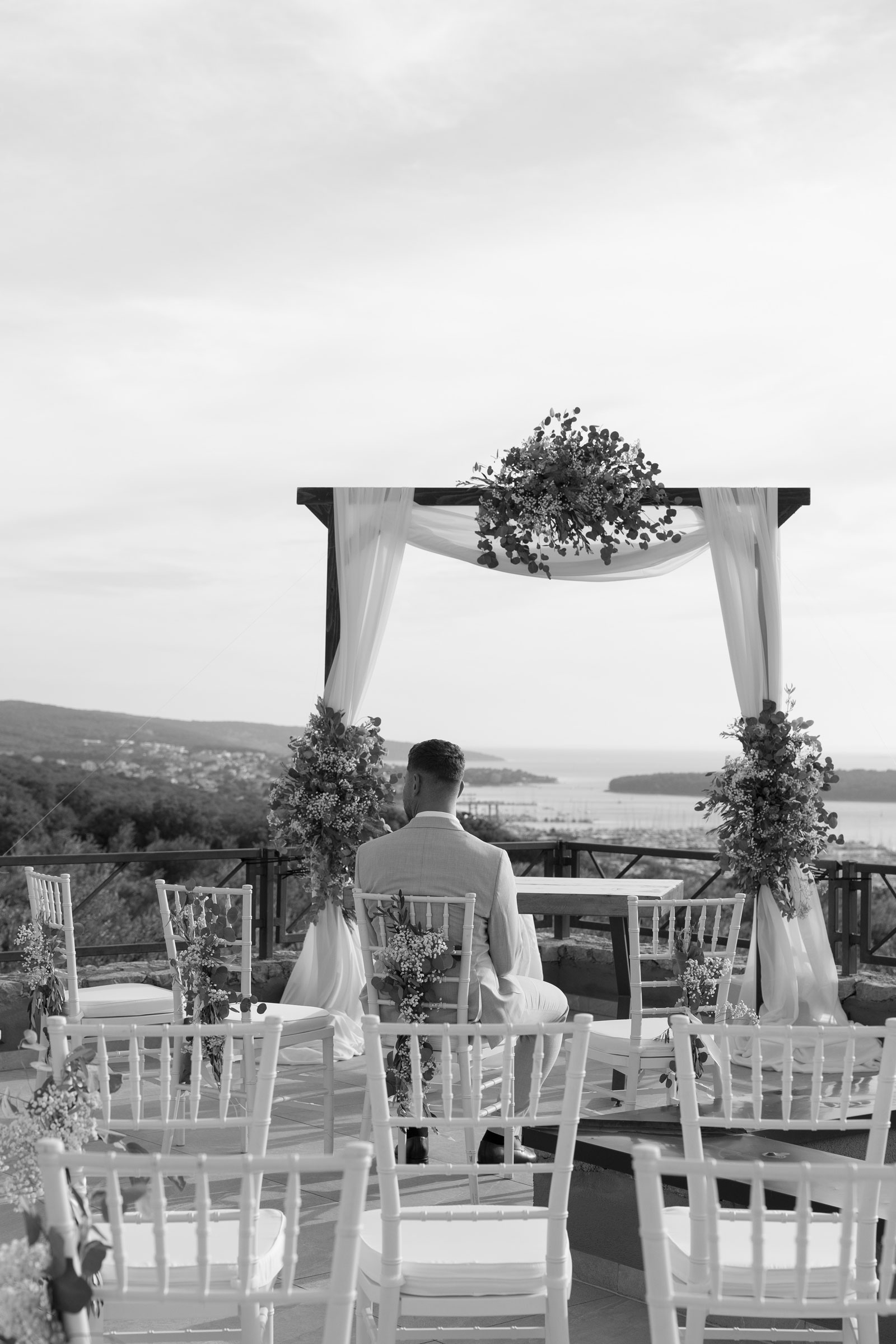
Image location: Punat, Krk
When to Get Married in Croatia
If you have flexibility, late May, June, September and early October are the best months. The weather is warm, the light is long and golden in the evenings, and the coast hasn't yet filled up with summer tourists. For photography especially, these months are ideal as the crowds thin out, the colours are softer, and you can actually have a quiet moment somewhere without a tour group walking through it.
July and August are beautiful but busy. The Dalmatian coast in particular gets extremely crowded, which affects everything from how your portrait locations feel to how easily vendors can get between venues. It's completely doable — just book earlier and plan around it.
Autumn from late September through October brings warm temperatures, fewer people, and a quality of light that's genuinely special. Istria and the Kvarner region in particular take on a different character that's quieter, more golden, and more private. Some of my favourite weddings have been in October.
Winter is underrated. If you want an intimate celebration without the logistics of peak season, a winter wedding in Croatia is worth considering. The venues are more available, the prices are lower, and the light throughout the day is softer and easier to work with. Istrian hilltop villages in winter feel like they belong to you completely.
Choosing a Venue
Croatia has an enormous range of venues, which is part of what makes it such a good destination wedding location. The challenge is knowing which type suits you.
Coastal estates and villas along Dalmatia and the Kvarner riviera tend to suit couples who want something elegant and scenic with sea views, stone terraces and gardens that lead to the sea. These venues photograph beautifully and have experience with international couples, which makes logistics easier.
Inland Istria is where you'll find the more unexpected options. Hilltop agritourism estates, old stone farmhouses, private vineyards. These venues suit smaller, more intimate celebrations and have a character that purpose-built wedding venues simply don't. If you want your wedding to feel genuinely yours rather than like a production, this is where to look.
For Dubrovnik, a few things are worth knowing upfront. The old town is stunning but access is regulated, permits are required for certain locations and it books up earlier than anywhere else in Croatia. If Dubrovnik is where you want to be, give yourself at least a year of lead time and work with a planner who knows it well.
Whatever type of venue you're drawn to, visit it (or at minimum video call your photographer from it) before confirming. Light, access and the practical flow of a day feel different in person than they look in photos.
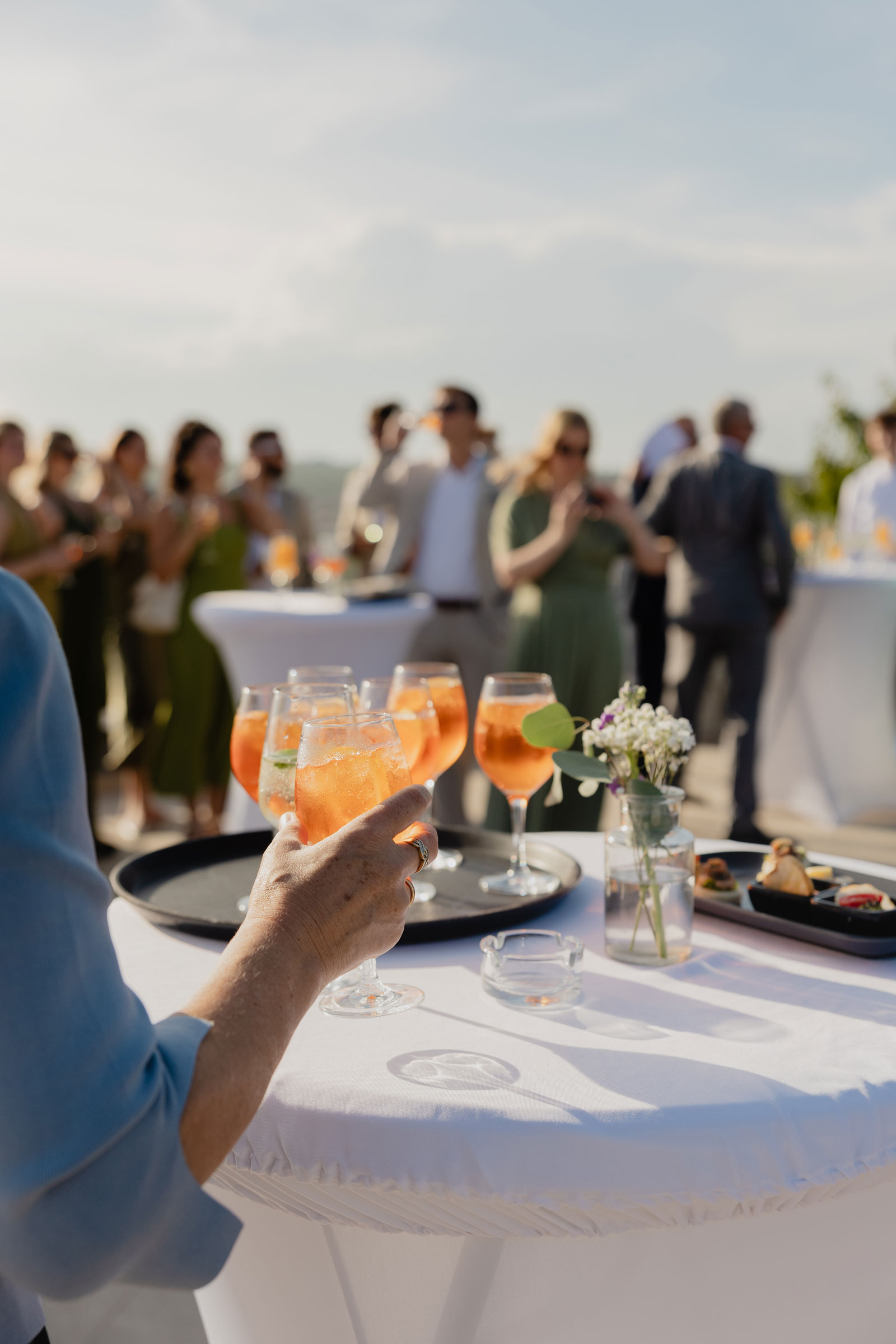
Image location: Punat, Krk
Building Your Vendor Team
For a destination wedding, your vendor team matters more than it would at home, because you're trusting people you've likely never met in person to carry a significant amount of weight on the day.
A local wedding planner is the most valuable investment you can make, especially if you're doing a legal ceremony. They know the registrars, the suppliers, the venues, and the paperwork. They also know what can go wrong and how to fix it quietly before you notice. For couples planning entirely from abroad, a good planner is the difference between a stressful process and a smooth one.
For photography and video, having one team cover both simplifies things considerably. Two separate crews from different companies who have never worked together before your wedding day adds coordination that you don't need. I shoot photo and my partner handles video; I edit both and we've worked together for years, and for destination couples managing everything from a distance, that one point of contact makes the whole process easier.
Hair and makeup, catering, florals — a local planner will have trusted contacts for all of these. I'd highly recommend not trying to source them independently from abroad, unless you have a specific recommendation from someone who has used them recently.
How Far in Advance to Book
For popular dates in high season, particularly June and September, a year to eighteen months in advance is realistic for venues and photographers. The best vendors at any price point fill up faster than most couples expect.
If you're planning a smaller celebration, an off-season wedding, or an elopement, you have more flexibility. But even then, six months is the minimum I'd recommend for anything that requires a venue and a full team.
A rough planning order that tends to work well: decide on the date and region first, then book the venue and photographer, then bring in a planner if you haven't already and work outward from there.
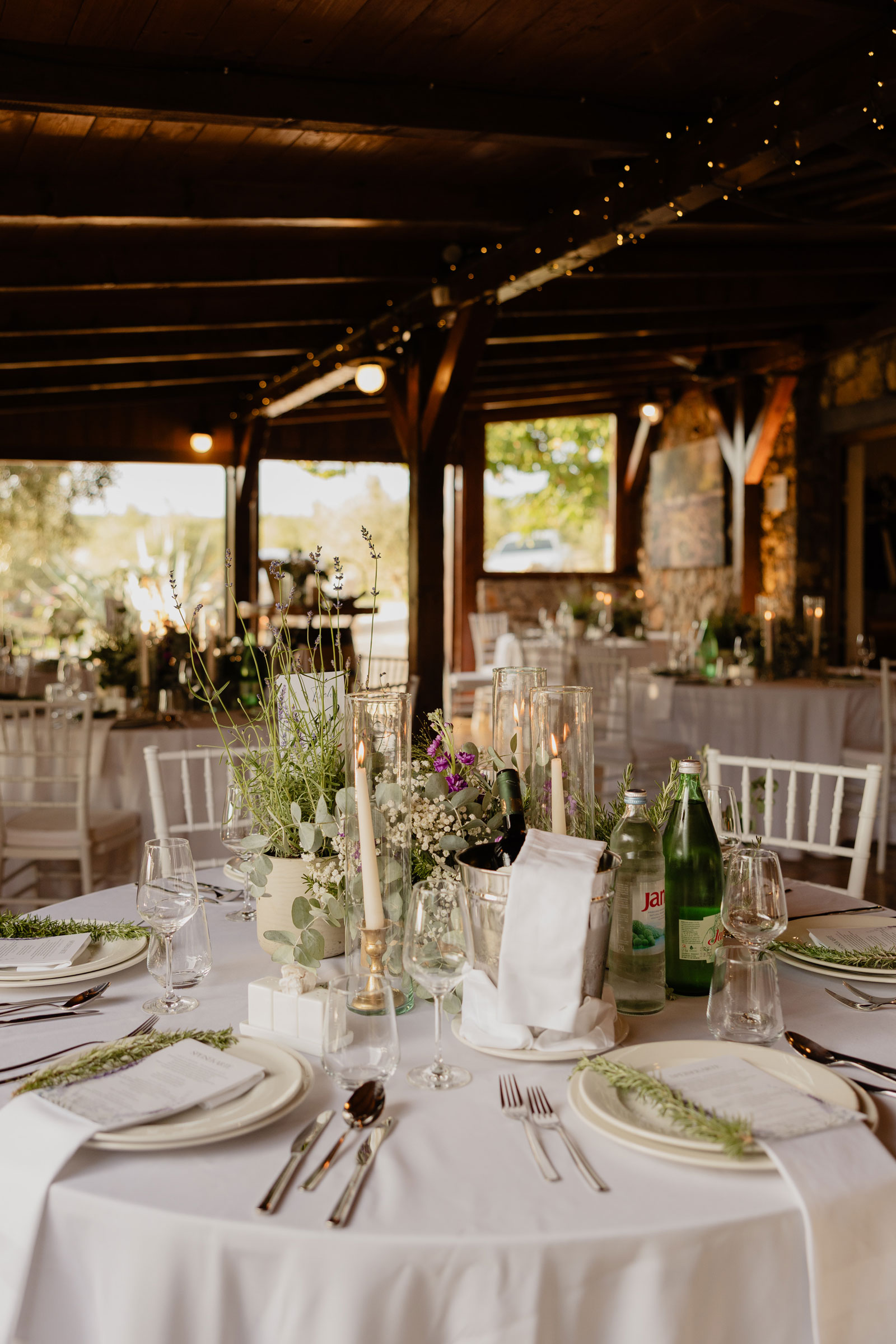
Image location: Punat, Krk
What to Expect on the Day
Destination weddings in Croatia tend to run at a slower pace than couples expect, and that's usually a good thing. The days are long, especially in summer and early autumn. There's time for a long lunch, a leisurely portrait walk in the evening light, and a dinner that actually feels unhurried.
The one thing worth building into your timeline is flexibility. Travel between locations takes longer than it looks on a map, especially on the islands or in old town centres where cars can't go. Your photographer and planner will have done this before and can help you build a realistic timeline, you should definitely trust their experience here.
And on the day itself, try to be present. The couples who end up with the most honest photographs are the ones who let the day happen rather than trying to manage it. The light, the location, the people you've chosen to be there and it tends to take care of itself.